20000
Plants Protected


by Cynthia B. Lauer
February 2026
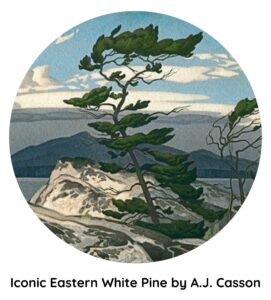
When it comes to conifer trees, pines are the king of the Ontario woodland. Often towering over neighbouring trees, pines are a stately presence in all seasons.
Three species of pines are native to our region—the eastern white pine, the red pine, and the Jack pine. The western white pine, limber pine, ponderosa pine, and lodgepole pine are found in western Canada. A tree of majestic beauty, Canadian pines are favoured by every true tree lover.
Pines belong to the same family as the fir, larch, spruce, hemlock, and yew. These species (and a few others not naturally found in Ontario) are all members of the Pinaceae family of conifers. Cupressaceae is the second important family of conifers in our part of the world. It includes cypress, false cypress, juniper, and what is commonly called cedar. The giant sequoia and California redwood are famous members of the Cupressaceae family.
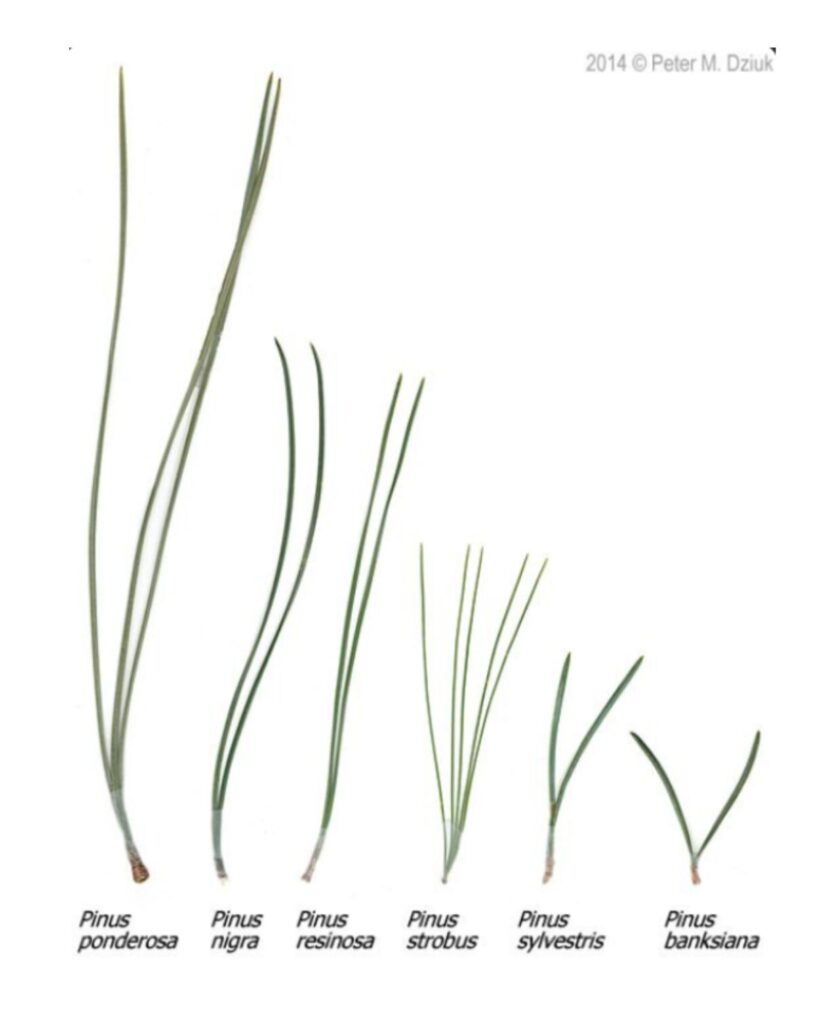
How can you identify a pine tree from its family members? We can set aside hemlock, larch, and yew to focus on the trees that are easier to confuse with pines—spruce and fir. You can learn to distinguish these three trees by comparing the form and structure of their needles and cones. Pine needles emerge from a sheath in bundles of 2, 3, or 5 whereas spruce and fir needles emerge as singles. Pine cones are hard, woody and rigid while those of spruce and fir are soft and flakey.
Let’s take a look at the five most common pines you’re likely to spot in parks, woodlands, and on private property in Simcoe region.
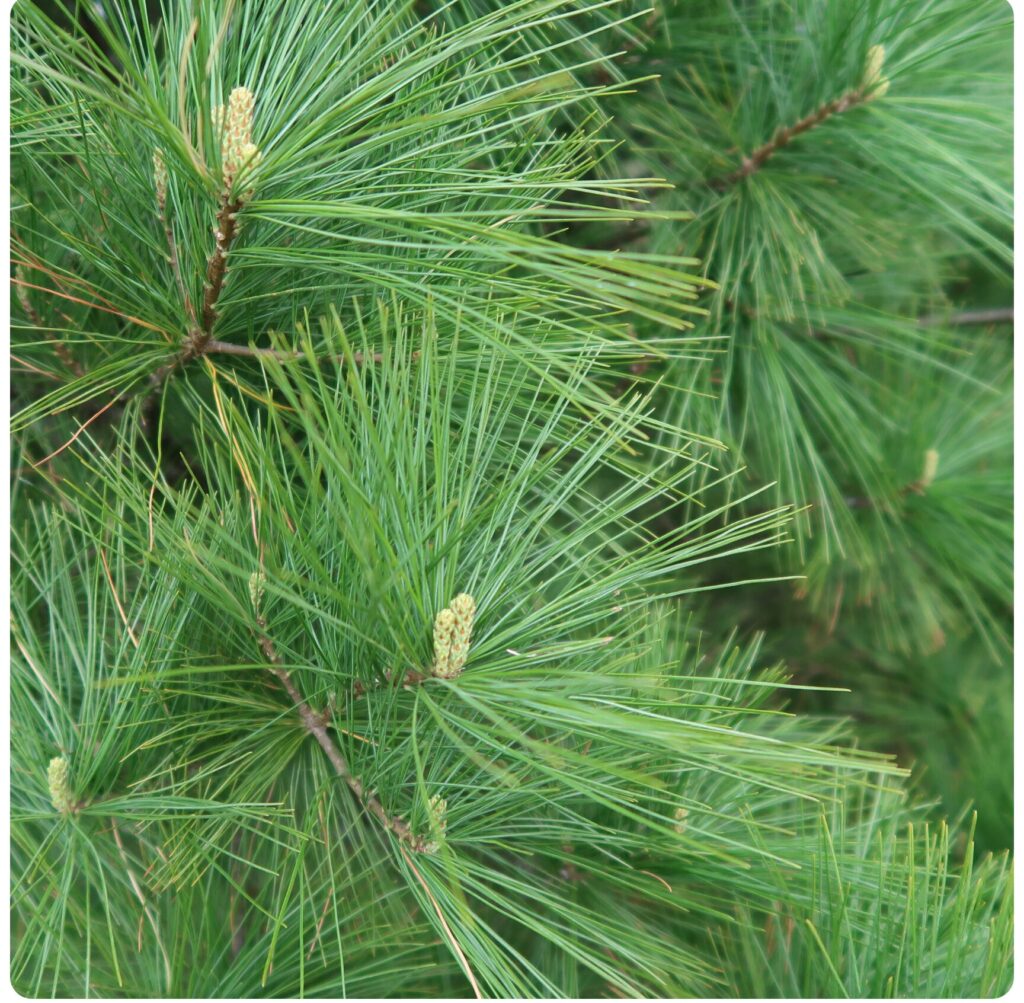
Eastern white pine (Pinus strobus) is the tallest tree in eastern Canada and the provincial tree of Ontario. An eastern white pine can live for 200 years and occasionally longer. This giant grows to a height of 40 m and 100 cm in diameter and can be found in forests, fields, and open areas. In forests, branches often fall off leaving the lower two-thirds of tree bare. Its bark is greyish-green changing to a darker hue with age. When mature, the bark has deep, thick ridges. The needles of the white pine are unique among pines. Growing in bundles of five and held together on a 2 cm long stalk, they are 5–15 cm long and soft to the touch. Cones are green at first then turn brown and are often encrusted with white, sticky resin. They are slender, cylindrical, and long at 8–16 cm.
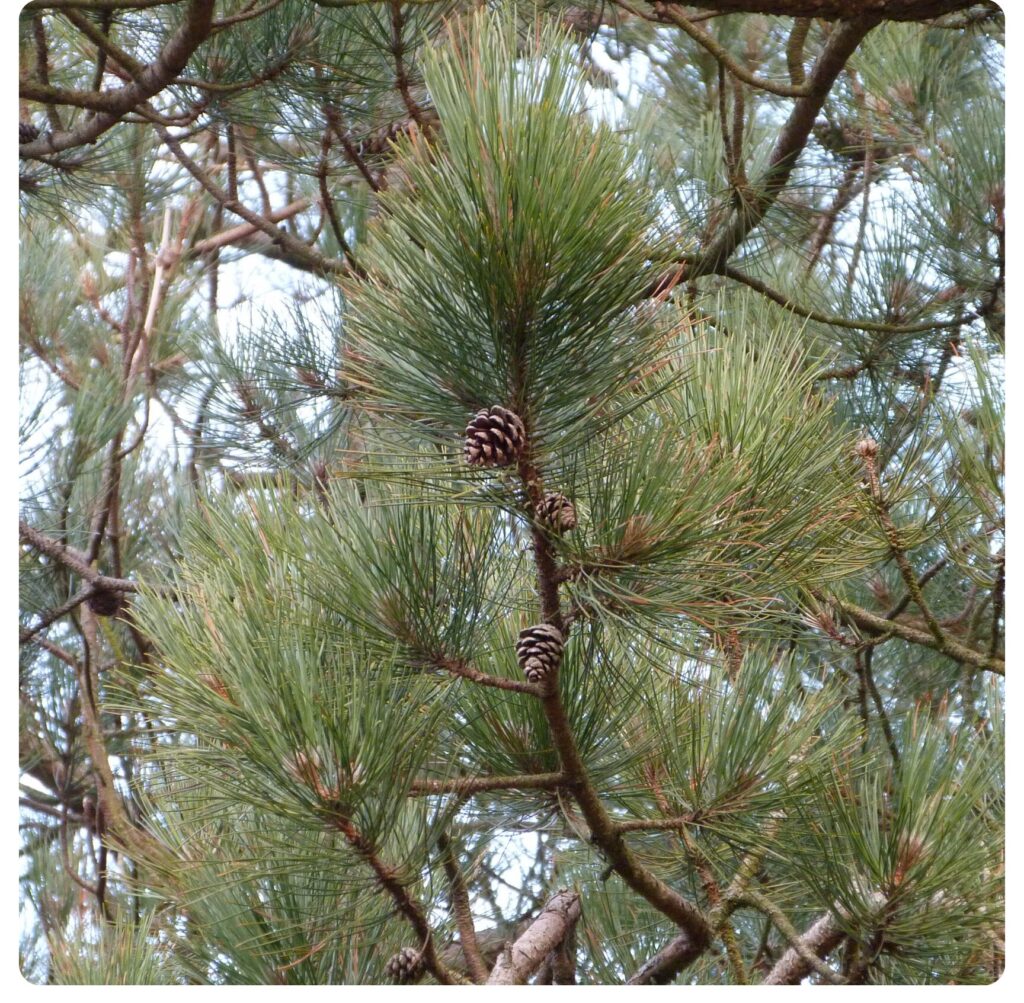
Red pine (Pinus resinosa) can be found in forests, sand plains, and in rocky areas from Manitoba to Newfoundland. It is a tall tree, growing to 35 m. Red pine can grow for 200 years and sometimes longer. Its flaky bark is reddish to pinkish-brown. As it ages, the bark becomes furrowed with broad scaly plates. Like the white pine, the trunks often lose their lower branches. Red pine is the only two-needled pine in eastern Canada with long needles. The shiny dark green needles are 10–18 cm long, straight, and snap cleanly when bent. Cones are oval-shaped and 3.5–7 cm long. Their purple colour turns to chestnut-brown at maturity.
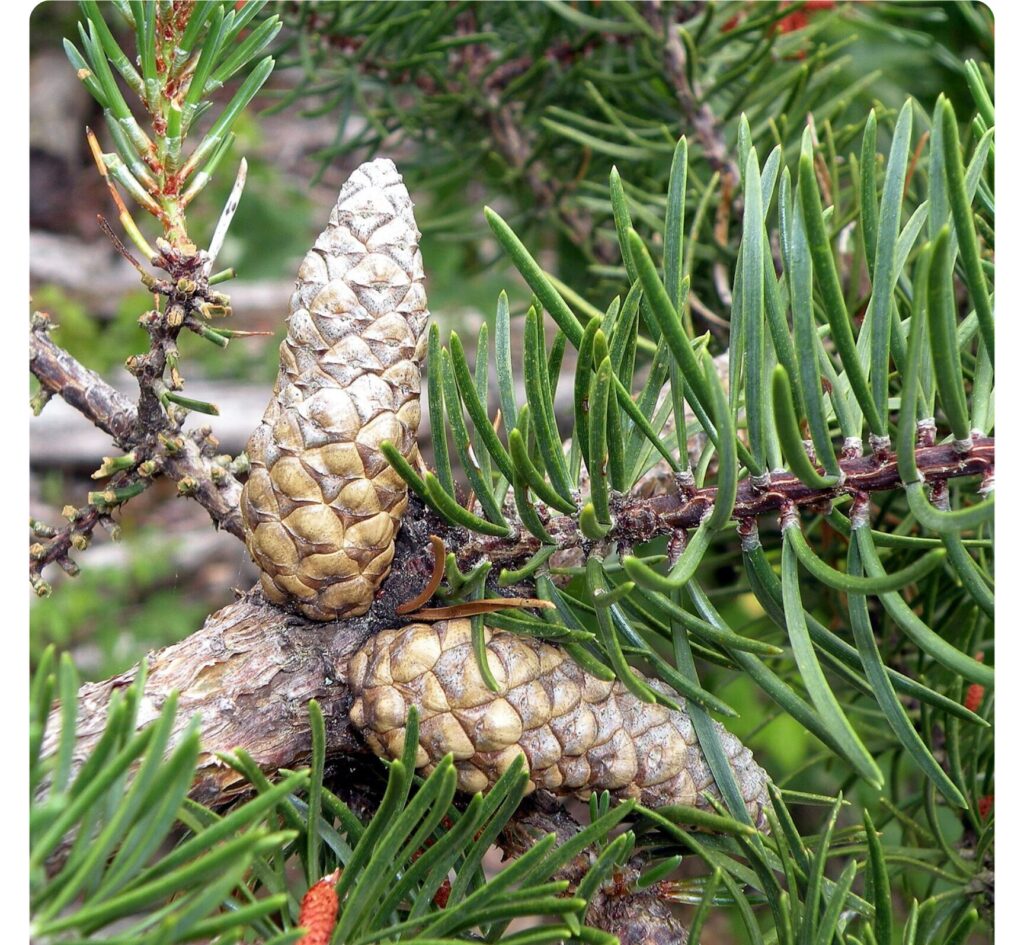
Jack pine (Pinus banksiana) is the most widely distributed pine in Canada. Growing to 20 m high or taller, its life span is 150 years and sometimes longer. It is the only native two-needled pine in eastern Canada with short needles. The needles are stiff and sharp and can be slightly twisted. Cones are 3–7 cm long and vary in shape from oblong to conical, straight or curved and usually point forward in clusters of two or three. Bark is reddish-brown to gray when the tree is young becoming dark brown and furrowed with age. In poor soil and rocky sites, branches die giving the tree a disorderly appearance. Canada’s national poet, Milton Acorn’s offers an apt description: “The Jack pine grows to any shape that suits the light, suits the winds, suits itself.”
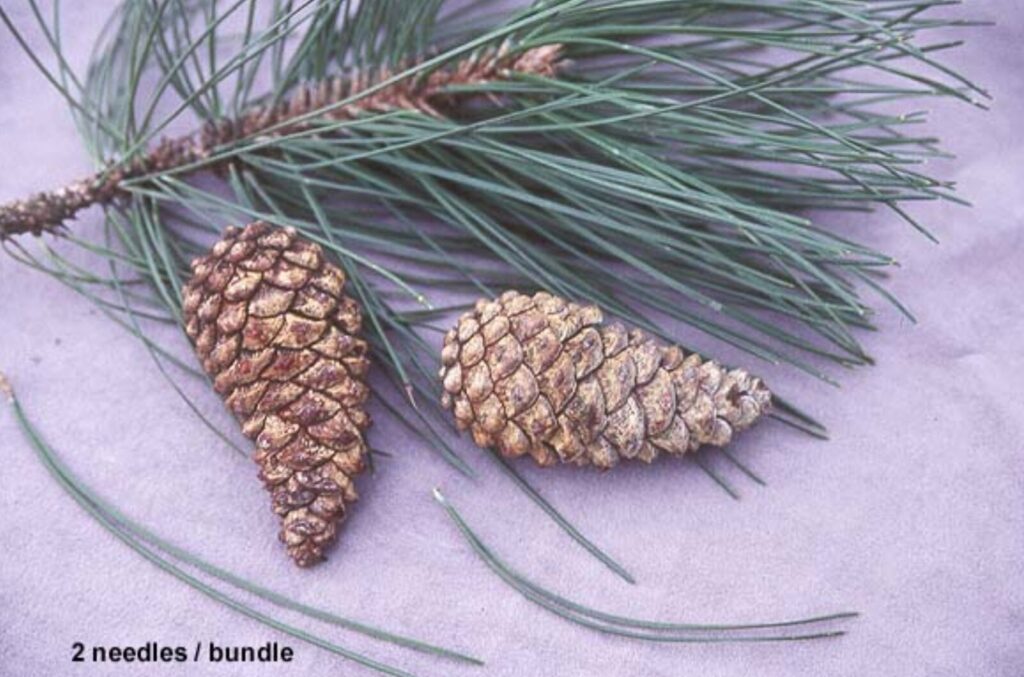
Two other pines have been introduced to Canada and are often confused with our native trees. Like its name suggests, Austrian pine (Pinus nigra) is native to southern Europe. It is under 30 m high and becomes irregularly shaped with age. Its needles are bundled in twos and are 8–16 cm long, straight, and sharp. They are similar to red pine but are stiffer and bend without breaking. Cones are oval, 5–8 cm long in clusters of 2–4 at right angles to the branch. The bark is dark brown to dark gray, and deeply furrowed. Due to Austrian pine’s tolerance for salt spray, air pollution, and dry soil, it is a popular tree for cities.
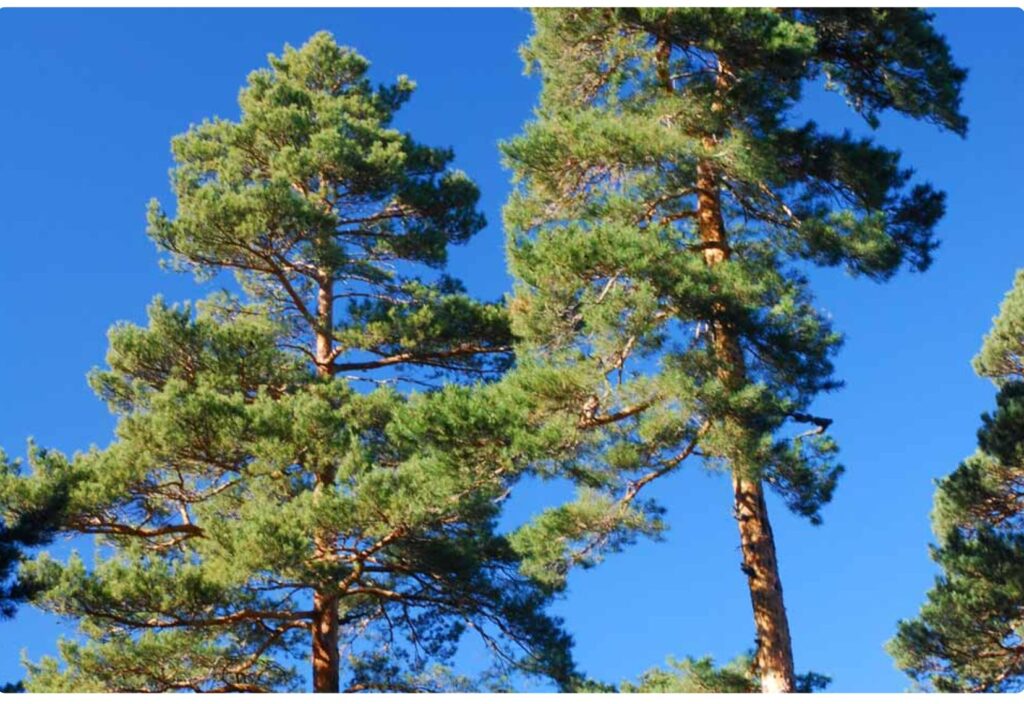
Scots pine (Pinus sylvestris) is the most widely distributed of the world’s pines. Growing to 30 m high, it is found from western Europe to eastern Asia from the Arctic Circle to the Mediterranean Sea. Its needles are long, twisted, stiff, and sharp and grow in bundles of two. Cones are 2.5–7 cm long and grow in clusters of two or three. strongly recommend replacing them with a native pine or another native tree.
They point backwards on the stem; their bright green spring colour turns to purplish brown by the end of the season. The bark at the top portion is orange-red and smooth; the lower bark is grayish to reddish-brown and deeply fissured. Trunk shape varies from straight and slender to short and crooked. Successfully naturalized in Canada, the Ontario Invasive Plant Council lists Scots pine as an invasive species dominating sensitive ecosystems like oak savannas, tall grass prairies and sand dunes. Seedlings spread aggressively and reach reproductive maturity quickly, eventually outcompeting native wildflowers and grasses as well as native oak, maple and pine species. Scots pine is susceptible to many pests and diseases that infect native pines and other trees. Conservationists
PICTURED
NATIVE SPECIES
NON NATIVE SPECIES
INVASIVE SPECIES
Scots Pine (Pinus sylvestris)
Native pines are a Canadian environmental icon for good reason. A dominant element in the Ontario landscape, their elegance testifies to the wondrousness of our forests. Historical conservationist John Muir (1838–1914) put it best: “Few are altogether deaf to the preaching of pine trees. Their sermons on the mountains go to our hearts; and if people in general could be got into the woods, even for once, to hear the trees speak for themselves, all difficulties in the way of forest preservation would vanish.”
Research resources used for this article include John Laird Farrar’s book Trees in Canada, Linda Kershaw’s book, Trees of Ontario, and the Ontario Invasive Plants Council. My work is AI-free.
A Living Green Barrie volunteer since 2025, Cynthia Lauer is a member of Simcoe County Master Gardeners and a regular contributor to The Gardener magazine. She loves tending her tiny woodland in Innisfil.