20000
Plants Protected


By Cynthia B. Lauer
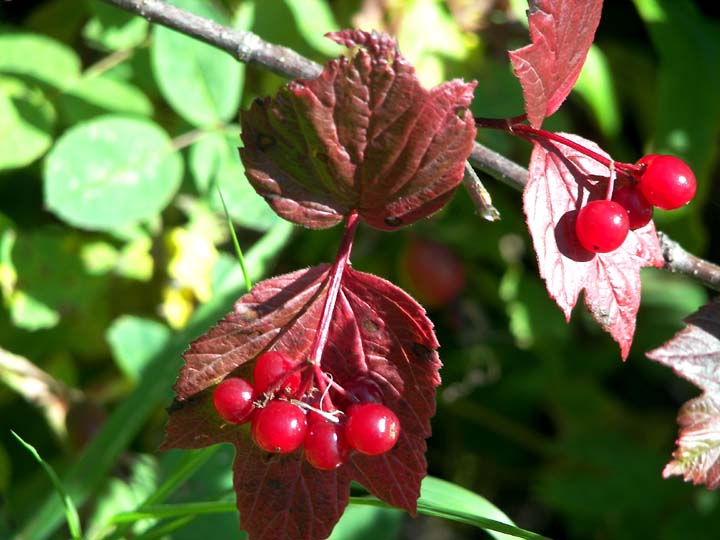
Highbush cranberry (Viburnum trilobum)
Most tree lovers can identify quite a few trees. They likely know a maple, oak, birch, aspen, beech, willow, cherry, pine, spruce, and cedar when they see one. They also know that tree ID gets granular. There are white and red oaks, sugar and silver maples, white and red pines, white and blue spruces, weeping and pussy willows, paper and yellow birch, apple and crabapple. And they probably know that these pairings are just the start of the science of naming trees.
Given how much there is to know about trees, using their common names turns out to be limiting. What kind of pine is invasive? Which oak is at the top of the keystone species list (supporting the largest number of insects)? What kind of beech can be planted as a hedge? Which cherry produces the sweetest fruit? Are all ash trees equally susceptible to the Emerald Ash Borer?
To answer questions like these, it’s necessary to home in on a particular species of tree. And to do that, it’s necessary to supplement the common name of a tree with its botanical name. Its scientific name. In Latin.
Using multisyllabic words belonging to a dead language may seem unnecessary for a blog about trees. It may look like a scientific convention more appropriate for a different audience like graduate botany students or environmental policy-makers.
But using scientific names is essential when sharing accurate information about plants.
Before we get into why, let’s take a closer look at the scientific system of naming plants and animals—taxonomy.
To a taxonomist, order is everything. From the top down, the hierarchy in which all living organisms are assigned a name is kingdom, phylum, class, order, family, tribe, genus, and finally species. Flowering plants are found in the kingdom Plantae and the phylum Magnoliophyta. From there, classifications become staggering in their complexity. Given the sheer numbers—with over 400 families in the Magnoliophyta phylum—family and genus often break down into sub-categories that are actively debated among taxonomists.
To qualify as a species, a group of plants must descend from a common ancestor and must be able to reproduce with one another but generally not with the members of another species. A species’ unique characteristics are reproduced through their seeds from one generation to another.
All living things are designated by two Latin words known as a binomial because it consists of two parts—the genus followed by the species. There is a strict protocol for writing the binomial—the genus is capitalized and the whole name is in italics.
Let’s take the example of the maple tree. All maples share the genus Acer but are differentiated by species. The result is a unique name that is universally understood and applied.
Our national symbol, the maple leaf, is produced by the sugar maple (Acer saccharum). Along with this iconic tree, the red maple (Acer rubrum), silver maple (Acer saccharinum), black maple (Acer nigrum), mountain maple (Acer spicatum), and striped maple (Acer pensylvanicum) are native to central Canada. Introduced maples are the Japanese maple (Acer palmatum), and the Norway maple (Acer platanoides).
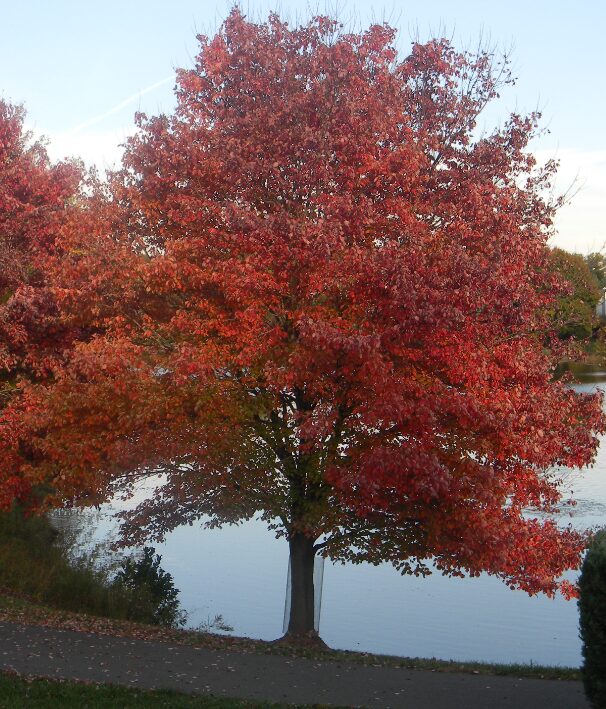
Taxonomic minutiae may sound tedious but they provide a lot of useful information to gardeners. Not only a who’s who of plants, scientific names also reveal what is related to what and how distantly they are related, where plants originated, and even something about a plant’s needs to thrive.
Unlike taxonomists, most of us pay little attention to the precise arrangement of stipules (the outgrowth on the base of a leafstalk) between two species of rose. Still, it’s fascinating to learn that the rose family includes many of the fruits we enjoy eating (cherry, peach, nectarine, plum, apricot, apple, pear, raspberries, strawberries). You may have a cherry or apple tree in your garden or maybe another member of the rose family—mountain ash, hawthorn, or serviceberry.
Let’s take a look at nut trees. The edible nuts from walnut, butternut, hickory, and pecan trees are all members of the Juglandaceae family. What about the nuts in the mixed can you can buy at the supermarket? It turns out that hazelnuts (Corylus avellana), peanuts (Arachis hypogaea), macadamias (Macadamia integrifolia), Brazil nuts (Bertholletia excelsa), and almonds (Prunus dulcis) are completely unrelated to walnuts or even to each other. The exception is cashews and pistachios which belong to the same family.
Of this long list of favourite snacks, only Juglans and two species of hazelnuts are native to Canada. Beaked hazelnut (Corylus cornuta) and American hazelnut (Corylus americana) are highly recommended shrubs.
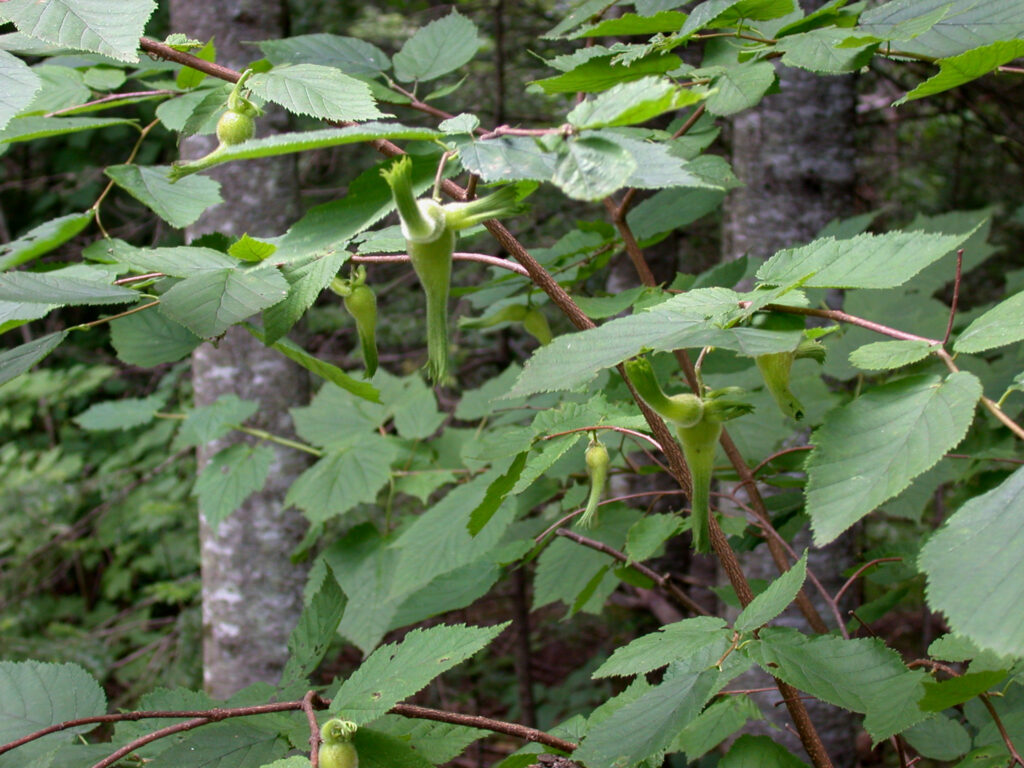
Beaked hazelnut (Corylus cornuta)
Another important advantage to using scientific name for plants is that it avoids confusion over common names. Roasted chestnuts eaten at Christmas dinner parties are imported from Europe where they are cultivated and harvested from the sweet chestnut tree (Castanea sativa). The American chestnut (Castanea dentata) was virtually killed off by chestnut blight in the mid-20th century. Another tree you know as chestnut or horse chestnut was introduced from southeastern Europe but is genetically unrelated to the edible chestnut. In fact, fruit from Aesculus hippocastanum is toxic to people and animals.
Landscapers often use cedars for hedges. Trees in the genus Cedrus grow in British Columbia but originate in distant lands. None are native to Canada. But we use it as a common name just the same. In Canada, we have the Eastern white cedar, Western white cedar and Western red cedar (also called Arborvitae) that belong to the genus Thuja. Then there is the Eastern red cedar. That tree happens to be a kind of juniper; its scientific name is Juniperus virginiana. All of these trees are very popular in gardens and are often found in nature. None, however, are real cedars.
You may be surprised to learn that olive trees grow here. Russian olive (Elaeagnus angustifolia) can sometimes be seen growing along highways because it’s salt tolerant. While pretty, the tree is listed as invasive. I once grew the rare native species, the silverberry (Elaeagnus commutata). Elaeagnus produce an edible fruit when fully ripe. But the olive oil we cook with is from a completely different tree. This famous tree (Olea europaea) is native to the Mediterranean region and is known by its common name, the European olive.
There are many other examples of specious common names for trees. The cranberry we use to make sauce is a shrub, Vaccinium macrocarpon (related to the blueberry), but the highbush cranberry is a viburnum. The mountain ash (Sorbus americana) is not an ash (Fraxinus spp.). The Douglas fir (Pseudotsuga menziesii) is not a fir (Abies spp.). Beer is made from hops (Humulus lupulus), a non-native vine. But there is also hop tree (Ptelea trifoliata), hop-hornbeam (Ostrya virginiana), and American hornbeam (Carpinus caroliniana) that refer to three different native tree species. The tree known as the box elder is neither an elder (Alnus spp.) nor, as many claim, an introduced species that has become invasive; it’s the native Manitoba maple (Acer negundo). The invasive black locust (Robinia pseudoacacia) should not be confused with the native honey locust (Gleditsia triacanthos). They look similar in some ways but they are unrelated.
Neglect of a tree’s scientific name becomes serious when it comes to the control of invasive species. An invasive plant is one that spreads so aggressively that it diminishes biodiversity, and degrades terrestrial, marine and other aquatic ecosystems.
Among trees, one terrible offender is European or common buckthorn (Rhamnus cathartica) introduced from Europe, and glossy buckthorn (Rhamnus frangula) introduced from Eurasia and North Africa. Small trees growing to 6 m tall, these buckthorns are very well-established in Ontario. My tiny backyard woodland sprouts dozens of tiny saplings every year that I remove. Invasive buckthorn is highly adaptable, happily growing in sun or shade, in good soil or bad. Seeds are produced early in the season and germinate quickly. Their leaves and fruit persist late into the fall. These characteristics allow buckthorn to out-compete native species.
But not all buckthorns are bad. Of the 100 or so species of buckthorn worldwide, 12 are native to North America. Cascara buckthorn (Rhamnus purshiana), for example, can be found in parts of British Columbia and Alberta. Alder-leaved buckthorn (Rhamnus alnifolia) is a native shrub found in wetlands in southern parts of Canada.
As for their common name, these buckthorns are not to be confused with sea buckthorn (Hippophae rhamnoides), a shrubby tree native to Europe and Asia but often grown in North America by permaculturists.
Norway maples (Acer platanoides) mentioned above, are easily confused with the sugar maple (Acer saccharum). But Norways dominate because they thrive in poor soils and are more resistant than native maples to insects and fungal diseases. They produce massive amounts of seed and their heavy shade prevents undergrowth. I had mine removed from my front yard and replaced with a native tree.
Scots pine (Pinus sylvestris) is a common Christmas tree because it retains its needles, grows rapidly and produces lots of seeds. It is the most widely distributed of the world’s pines. But since it hosts a great many pests and diseases that spread to native pines and other trees, it is highly undesirable. It can be difficult to tell a Scots pine from other pines so it’s important to check the scientific name.
The speckled alder (Alnus incana) is a native tree found along stream banks in Central and Eastern Canada. Its cousin, the European black alder (Alnus glutinosa) is an introduced species that wreaks havoc on native plants. Extremely hardy even in the coldest temperatures, this tree grows fast and aggressively. As it grows, it blocks native wetland plants from water, nutrients, and sunlight. Its dense root network can even change watercourses and increase the risk of flooding.
To complicate matters, many urban trees found in private gardens are a variety, hybrid, or cultivar of the species. These are trees that are developed to emphasize desirable features such as a shorter height and narrower spread, a longer bloom period, disease resistance, and so on. A plant tag always includes this information as an addendum to the scientific name.
Let’s look at some examples.
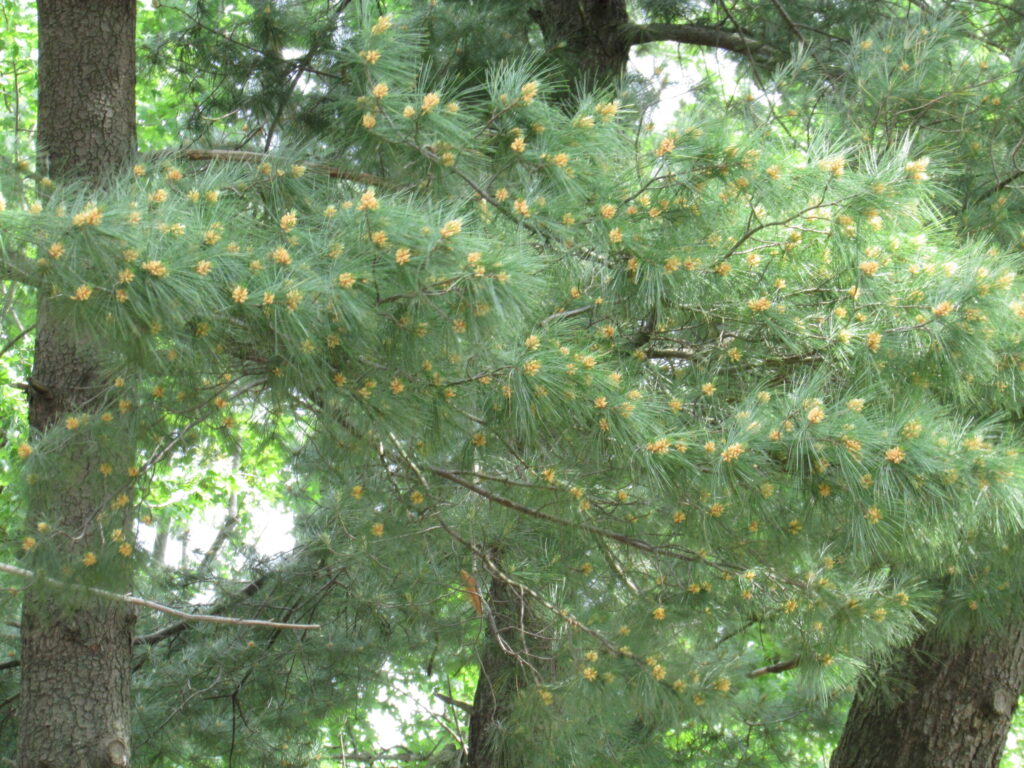
White Pine (Pinus strobus)
A local nursery I’ve shopped at stocks white pine (Pinus strobus), but it also sells many cultivars of that tree. Not every garden can accommodate a tree that grows to 25 m, so to appeal to urban gardeners, the nursery offers these cultivars (among many more): Angel Falls white pine, a short tree with weeping branches that grows only 3 m high; Coney Island white pine, a small bush at 1.2 m high; and Niagara Falls white pine, a variety that spreads 3 m along the ground.
This nursery offers columnar forms of many native trees: the red maple, Acer rubrum ‘Armstrong’ with a spread of only 5 m; a very skinny form of sugar maple, Acer saccharum ‘Temple’ with a spread of only 3 m; and a tall but narrow pin oak, Quercus palustris ‘Pringreen’. Even the massive tulip tree has been cultivated into a pyramidal form, Liriodendron tulipifera ‘Fastigiatum’.
Cultivars go well beyond spread. There are disease-resistant cultivars of American elm such as Ulmus americana ‘New Harmony’; a sparsely branched staghorn sumac, Rhus typhina ‘Dissecta’; and a purple-leaved variety of honey locust, Gleditsia triacanthos var. ‘Rubylace’. For those who seek maximum bloom, there are seven cultivars of the native flowering dogwood with poorly chosen names like Cornus florida ‘Cherokee Princess’.
There is a cultivar, hybrid, or variety to suit every fancy. Such trees are given a proprietary name that follows the scientific binomial. In every case, the plant tag reads like this: Genus species ‘cultivar name’ like the trees I discuss above, or ‘var. name’ (if it’s a variety) or ‘X name’ (for a hybrid). This format is universal in the plant industry.
Using the scientific name for a tree prevents confusion about whether you’re looking at a straight species or a tree that has been cultivated or hybridized, or otherwise deviates from the species.
There’s no need for readers to immerse themselves in abstract scientific concepts or learn a foreign language. You needn’t go and memorize these names (unless you want to).
When I write about trees, or any gardening topic, I seek evidence-based information. I aspire to high standards. That’s why I always use both the common name and the scientific name for a plant.
The more you learn about trees, the more you appreciate their distinctiveness associated with their taxonomic place in the plant world. Appreciating scientific names makes you a little less of an amateur. Like me and many other nature lovers, it’s part of being a lifelong learner about trees in all of their fascinating glory.
A Living Green Barrie volunteer since 2025, Cynthia Lauer, PhD is a member of Simcoe County Master Gardeners and a regular contributor to The Gardener magazine. Research resources used for this article include John Laird Farrar’s book, Trees in Canada, Linda Kershaw’s book, Trees of Ontario, and the Ontario Invasive Plants Council. Cynthia’s work is AI-free.