20000
Plants Protected


By: Cynthia Lauer
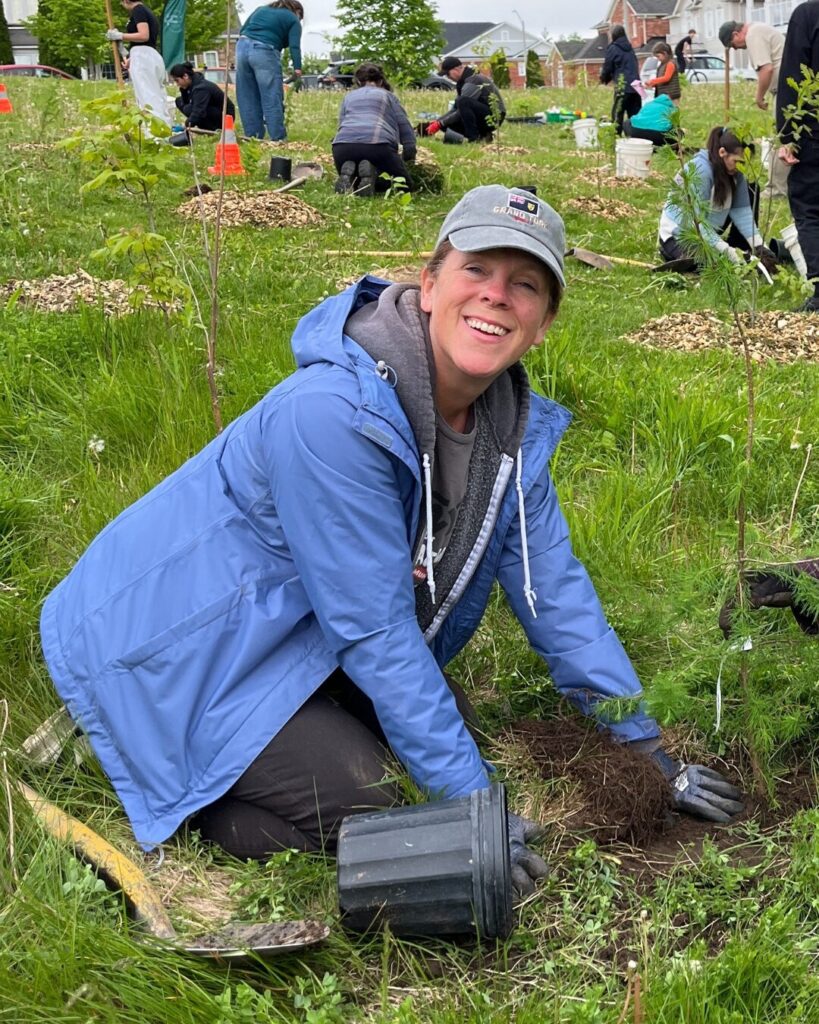
It’s May. This month, Living Green Barrie’s 12 Actions for Climate focuses on planting trees.
Every year, Living Green Barrie offers many wonderful native trees for sale. In 2026, the selection is very large. They have two kinds of aspen—large tooth (Populus grandidentata) and trembling (Populus tremuloides); balsam fir (Abies balsamea); two kinds of birch—white (Betula papyrifera) and yellow (Betula allegheniensis); black cherry (Prunus serotina); black walnut (Juglans nigra); hemlock (Tsuga canadensis); three kinds of maple—freeman (Acer freemanii),
red (Acer rubrum), and sugar (Acer saccharum); four kinds of oak—bur (Quercus macrocarpa), pin (Quercus palustris), red (Quercus rubra) and white (Quercus alba); northern catalpa (Catalpa speciosa); tamarack (Larix laricina); white cedar (Thuja occidentalis); white pine (Pinus strobus); and white spruce (Picea glauca).
From this list of twenty trees, I chose eight to describe in some detail. My October 2026 blog article describes some of Living Green’s lesser known species.
For each tree, I note the native range, key features, growth habit, mature height and spread, and growing conditions for light, soil, and water. I also provide information on how the tree contributes to the ecosystem as a food source for insects and birds, as host to butterfly and moth larvae, and other forms of environmental support. These features are easily overlooked but are essential to our ecological well-being.
Most of these trees get very large. That’s not something to fear. In fact, the bigger the tree and the wider its canopy, the more work it does for the environment. It’s the large trees that are best at improving air quality, providing food, protecting us from wind and flooding, regulating the temperature, conserving water, and storing carbon.
This month, I hope that you are able to find room for a few of them in your garden.
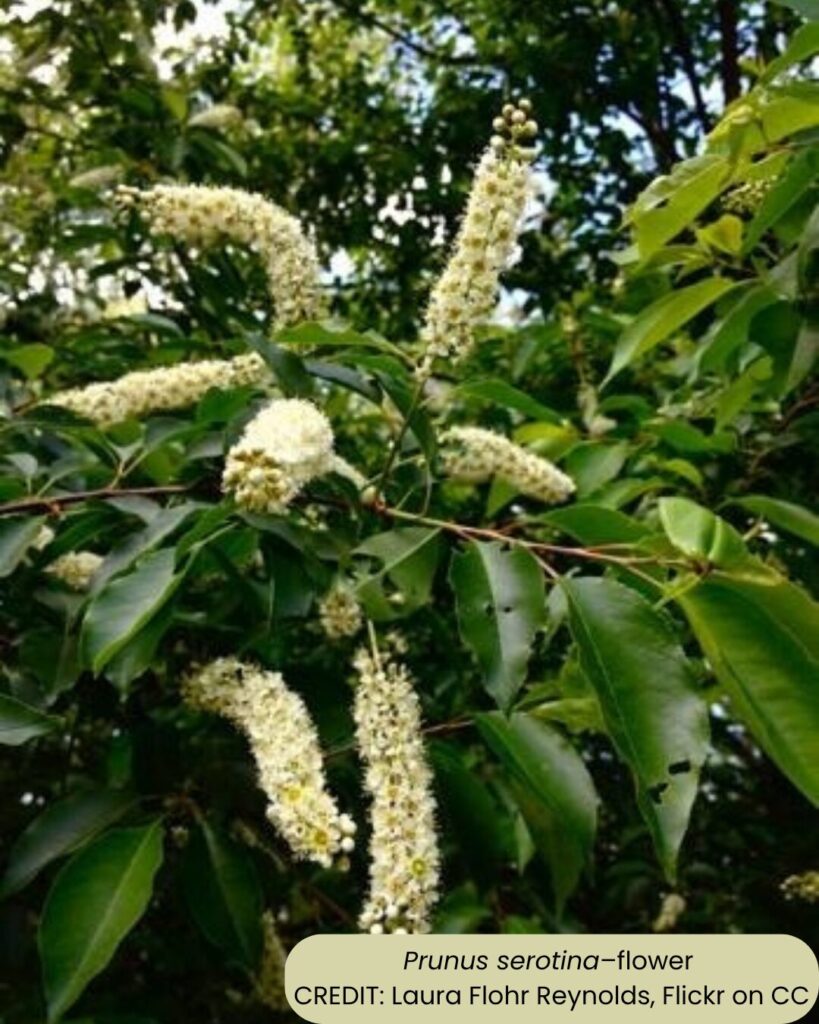
Black cherry (Prunus serotina) is a member of the rose family. In the wild, it grows in open woodlands and on rocky terrain throughout Ontario, Quebec, New Brunswick, and Nova Scotia. The largest member of the genus Prunus native to Canada, black cherry is fast-growing with a straight trunk and rounded crown. It can attain a mature height of 30 m. Its dark bark features an attractive horizontal pattern and its foliage is beautiful in the fall. The tree must be planted in full sun but is not fussy about soil type. White, long-lasting, fragrant flowers grow in loose clusters.
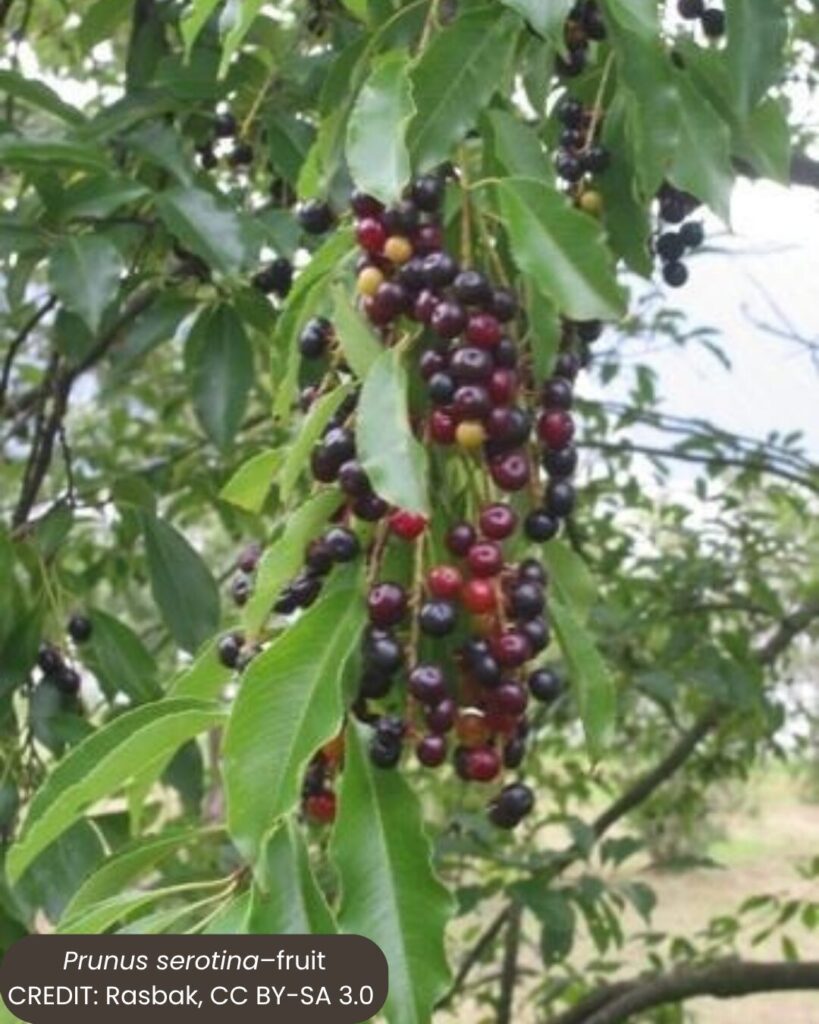
They eventually give way to clusters of dark red fruit that ripen in August or early September. Astringent but edible, they can be eaten raw or used in jelly, syrup, wine, juice, or pies. Pruning the tree controls its height and form and increases the fruit harvest. When it comes to providing environmental support, cherries are ranked #2 (after oaks) on the list of keystone plants. Black cherry is a larval host for hundreds of species of caterpillars like the eastern tiger swallowtail, coral hairstreak, and viceroy as well as for dozens of moths like the wild cherry sphinx and great tiger. Its flowers and leaf stalks produce nectar and pollen for bees, flies, and other pollinators. Cherries provide food for 40–70 species of birds like cedar waxwings, robins, bluebirds, orioles and woodpeckers. Birds use it for nesting and wildlife find shelter in its branches. Deer and rabbits are unlikely to damage it. A pioneer species that may live for 150 years, black cherry quickly inhabits areas disturbed by fire or logging, helping to restore these ecosystems. Use it in an urban woodland, along fence lines, or as an accent tree. Note that the leaves, twigs, and seeds contain hydrocyanic acid that is toxic to people and livestock.
Bur oak (Quercus macrocarpa) grows naturally across central Canada and the prairies. Its natural habitat is deep, rich bottomlands to rocky uplands and grasslands. The most common native member of the white oaks, it grows slowly to a mature height of 36 m and lives for 200 years.
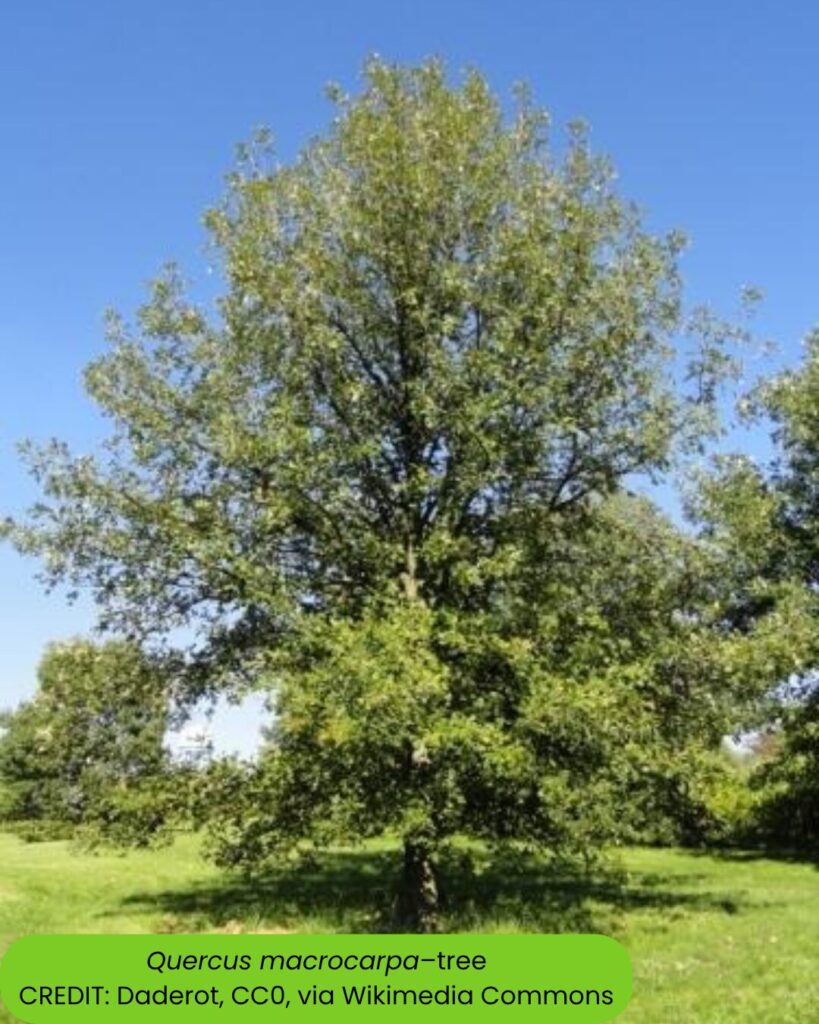
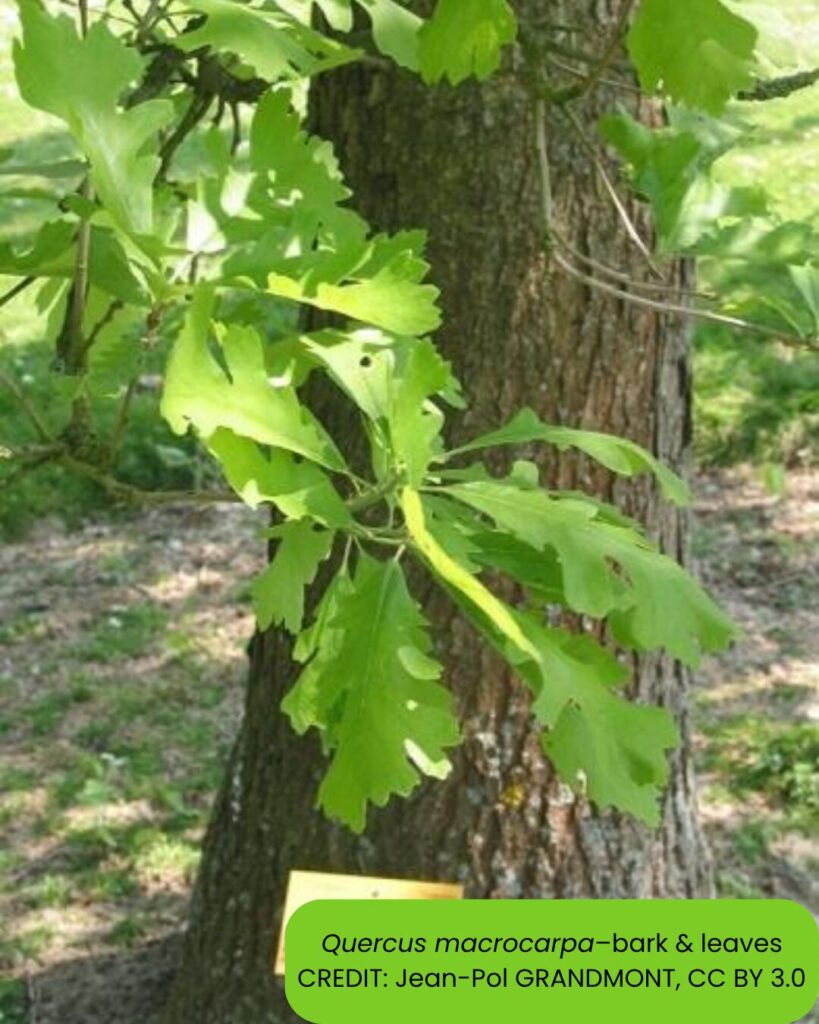
Bur oak prefers sun to part-shade and dry to moist soils. It tolerates drought, road salt, and urban conditions. World-renowned environmentalist Doug Tallamy advises homeowners to have at least one oak tree due to their status as a keystone species. Hosting insects over their life cycle, bur oak is a biodiversity hub. It provides nectar and sap for pollinators and early spring pollen for bees. A larval host for butterflies including the banded hairstreak and white admiral, the bur oak is also a larval host for hundreds of moths including eclipsed oak dagger and waved sphinx. Birds find nesting sites and eat the tree’s foliage and acorns. Oaks provide overwintering shelter and leaf litter habitat for insects that are the base of the food web for birds and their young. You needn’t prune an oak other than to remove dead, diseased, or damaged branches. Plant this ornamental shade tree at the roadside, boulevard, woodland, or along fence lines.
Hemlock (Tsuga canadensis) is a member of the pine family. Native to eastern North America from Nova Scotia to the Great Lakes–St. Lawrence Forest region, this evergreen conifer grows best in cool, moist, and shady sites that are somewhat protected. Tolerant of full sun if the soil is kept moist, hemlock is intolerant of urban stress, road salt, and soils that are very wet or very dry.
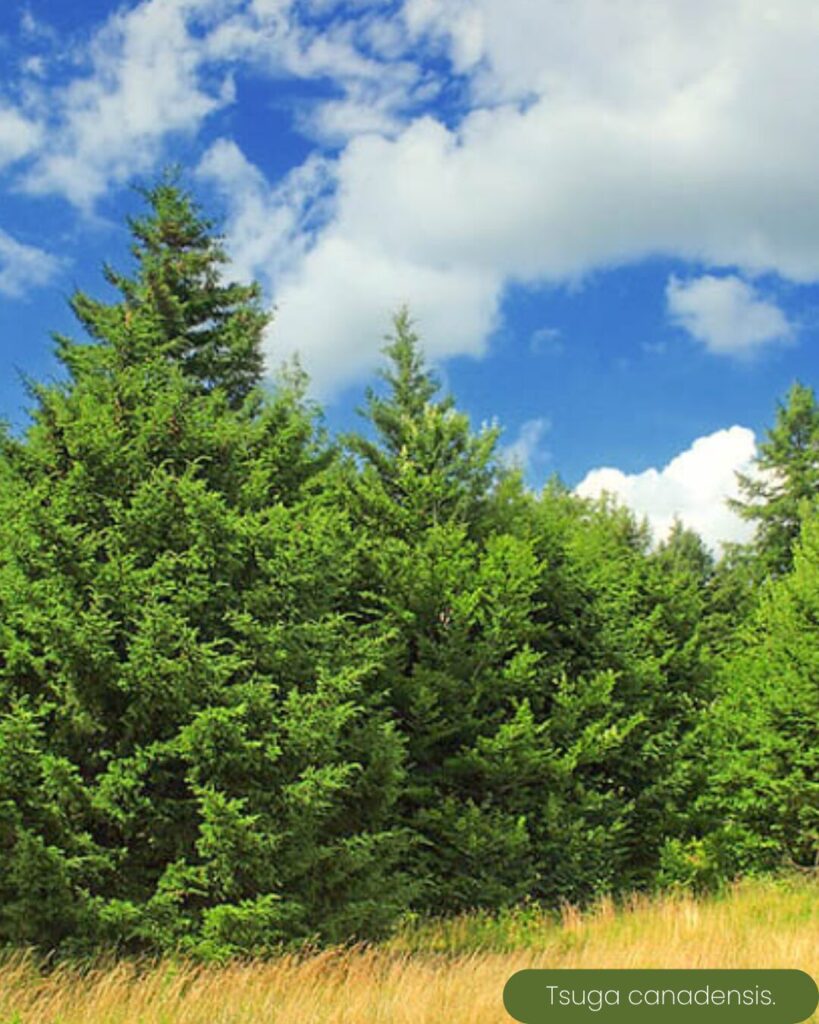
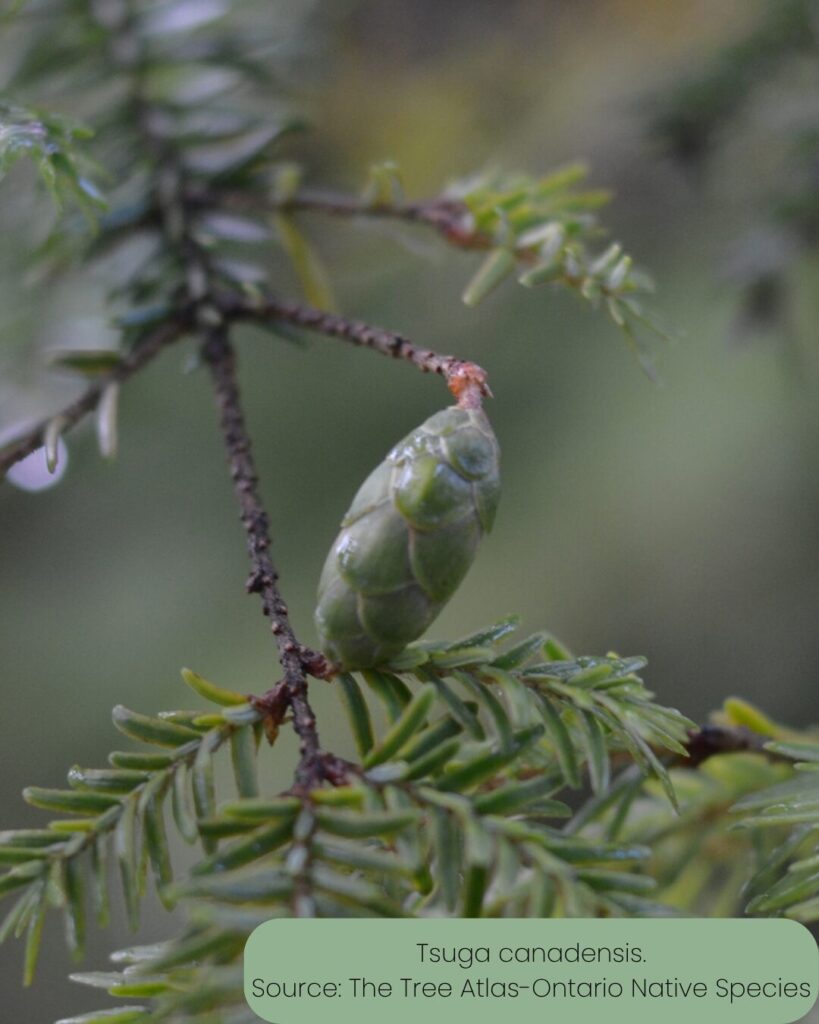
This tree prefers slightly acidic, nutrient rich, well-drained soil. It needs protection from the wind. Growing to 18 m, with age it achieves a graceful, pyramidal shape. Its main leader and its outer branches droop gracefully and its flattened, short, deep green needles have two white stripes underneath. Cones are small and oval-shaped and hang from branch tips. Hemlocks are a host plant for several moth species and they provide dense cover and food for white-tailed deer, snowshoe hares, porcupines, ruffed grouse, and wild turkeys. It serves as nesting habitat for many bird species. Songbirds feed on its seeds. With a moderate to slow growth rate, the hemlock can live up to 600 years. An ornamental evergreen, hemlocks can be planted in groupings, as a background planting in semi-shaded gardens, or as screening.
Trembling aspen (Populus tremuloides) is a member of the willow family and found coast to coast often growing in pure stands of cloned trees. Its trunk is long, cylindrical and smooth with little taper to a narrow crown. Fast-growing to 25 m in full sun and moist, well-drained soil, trembling aspen bark is grey to white. It has pretty heart-shaped leaves, long catkins, and brilliant yellow foliage in the fall.
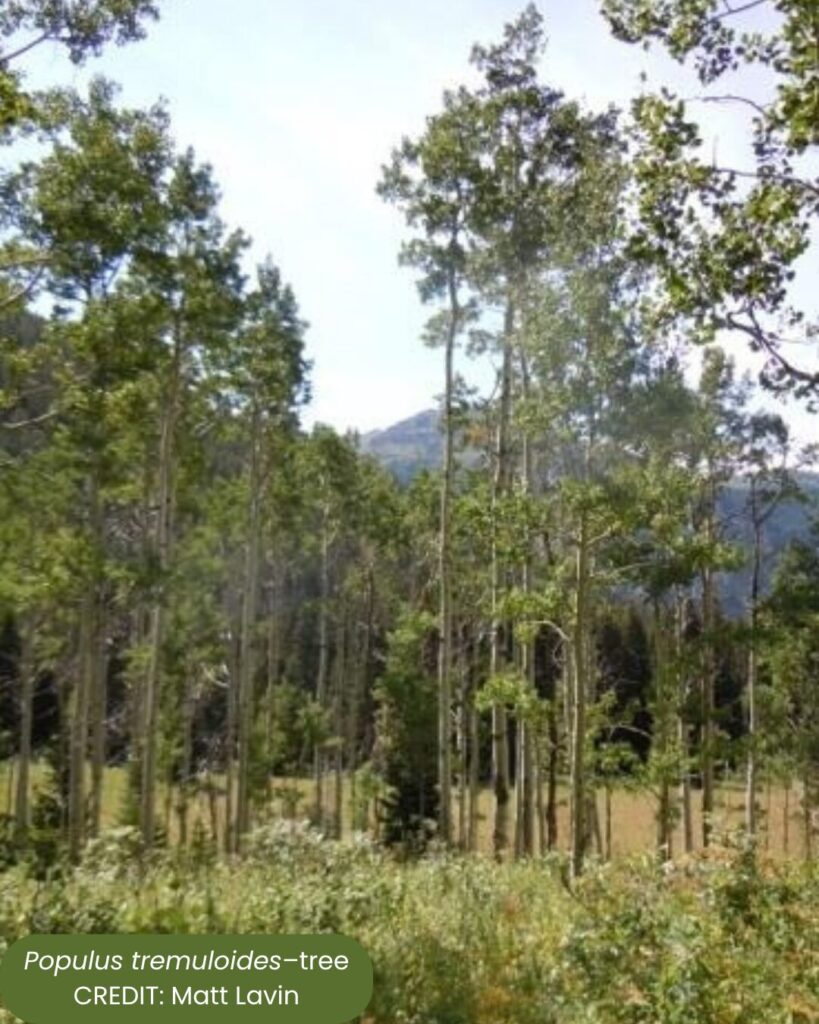
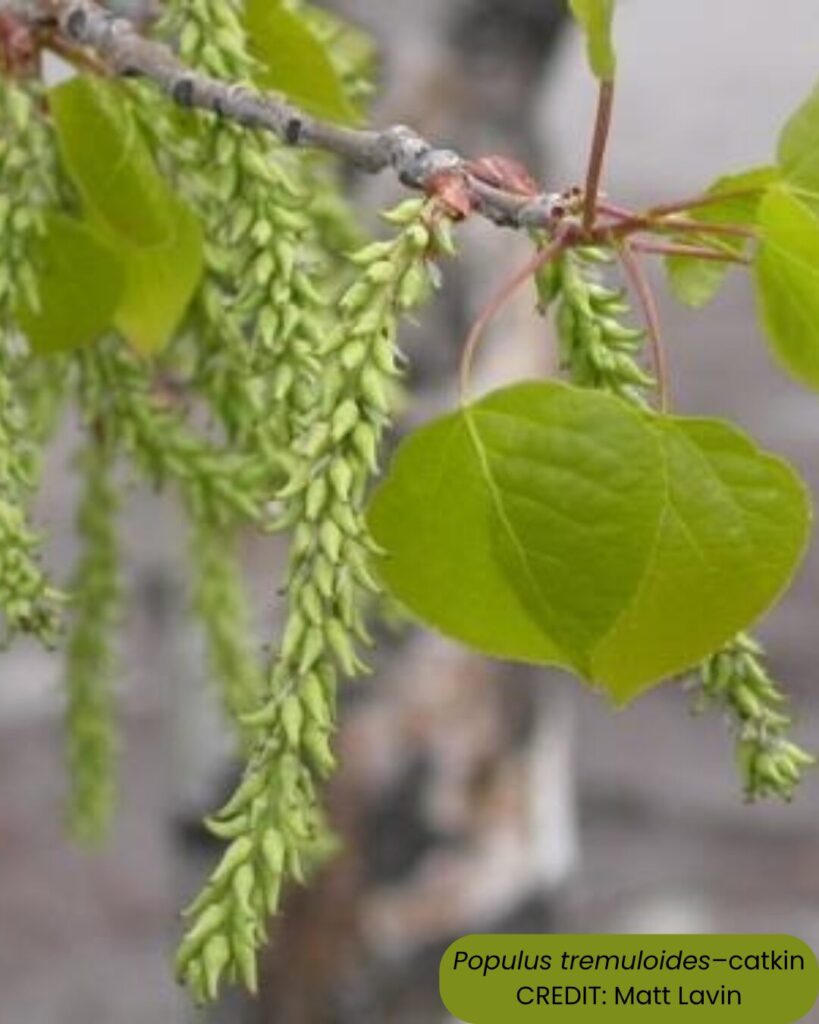
Branches self-prune, dropping naturally from the lower part of the tree. Trembling aspens tolerate a range of soils. They also tolerate road salt, urban conditions, hot summer weather, and animal browsing. Its catkins provide early-season pollen for bees, butterflies, and other insects. About 500 species of plants and animals use aspens for food and habitat. Bees seeks its nectar and many lepidoptera like the viceroy and eastern tiger swallowtail butterflies use it as a larval host. As habitat for wood-boring and other insects, the tree attracts beneficial insects and birds such as warblers and flycatchers. Woodpeckers, nuthatches, and owls nest in the tree’s cavities and feed on the buds and catkins. Use this aspen in a woodland, along fence lines, or for erosion control. Rustling in the breeze, this tree is a visual and auditory treat. They don’t take up a lot of space in the garden so if you let the underground root network produce its suckers, you can have an aspen mini-forest.
Red maple (Acer rubrum) can be found growing in the wilds from Newfoundland to Ontario, occurring on a great variety of soils and sites. Famous for its fall foliage, the red maple boasts a very early spring bloom and ornamental red twigs, buds, flowers, immature fruits, and leaf stalks.
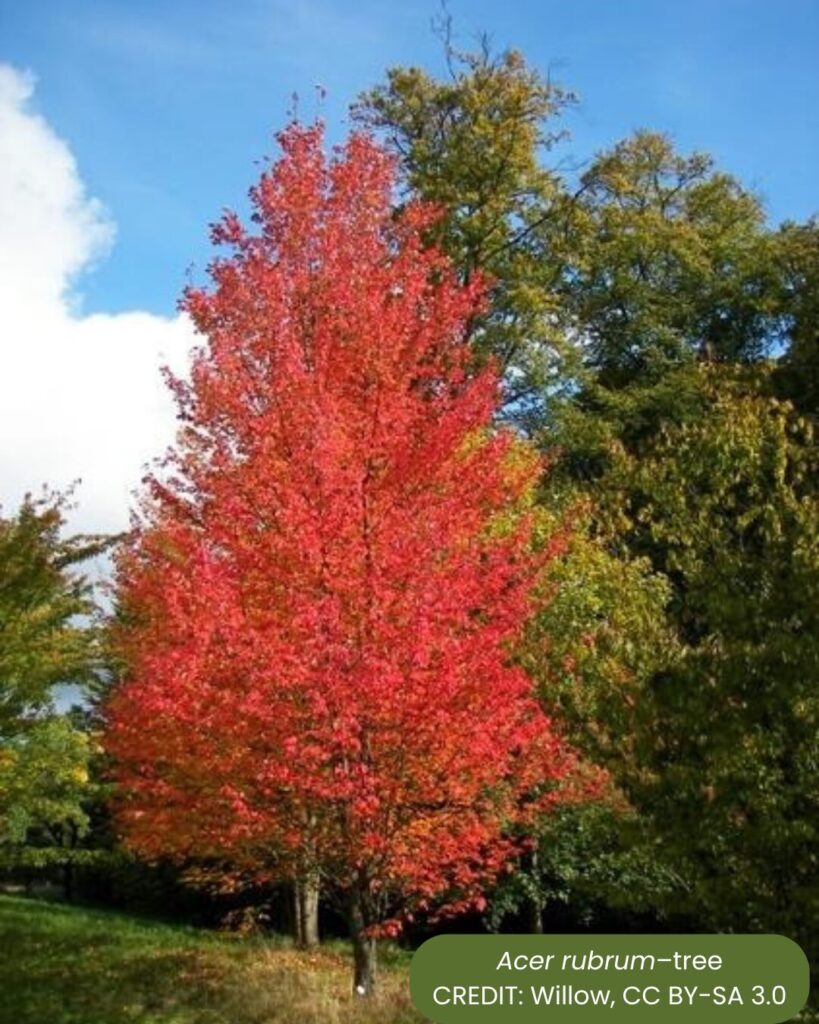
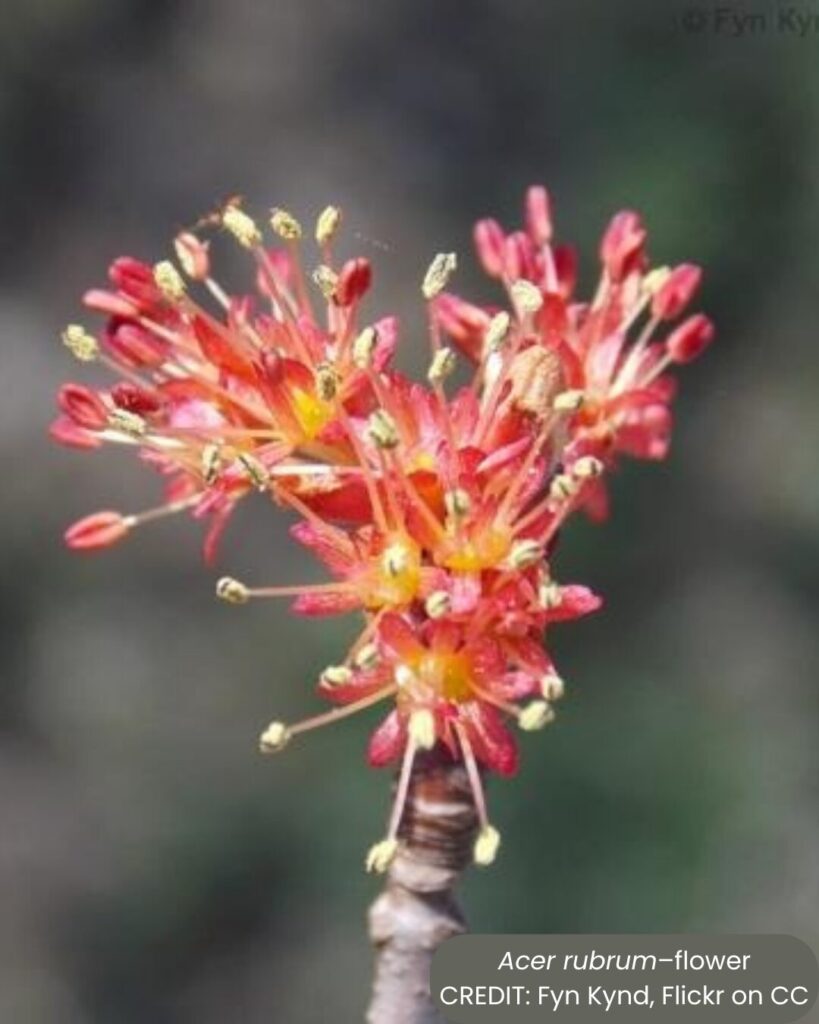
Fast-growing to 25 m, it has shallow roots and a long and narrow crown. Preferring sun to part shade and average to wet soils, red maples are intolerant of soil compaction, urban conditions, deer and rabbits. Pairs of winged keys (samaras) hang in clusters and drop in late May to early June. A pollinator powerhouse plant, the red maple is larval host for hundreds of butterfly and moth species with colourful common names like the giant leopard and yellow woolly bear. It provides nectar and pollen to early mining, sweat, mason, and cellophane bees when relatively few other floral resources are available. Diverse pollinators like flies, beetles and sometimes hummingbirds are attracted to its pollen and nectar. A foraging site and nesting habitat for insects and songbirds, the red maple is a food source for finches, cardinals and other birds. Birds and small mammals live in its hollows. The seeds are eaten by squirrels, chipmunks, and birds. With a mechanism like a hydraulic lift function, maples raise water from deep soil layers to the surface. Use it in the rain garden or as a specimen or ornamental.
Red oak (Quercus rubra) is a member of the beech family. Occurring naturally from Prince Edward Island to Ontario, it is beloved for its excellent fall foliage that persists over winter. A round crown, straight trunk, and deep root system with a taproot are among its key features.
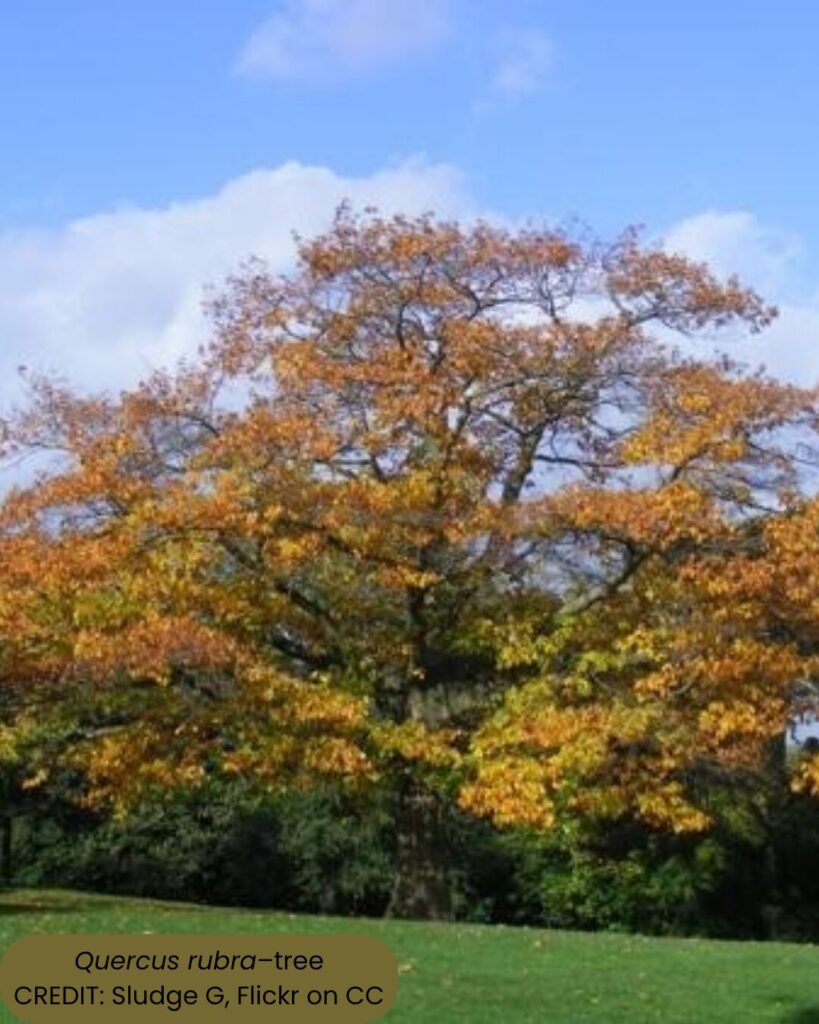
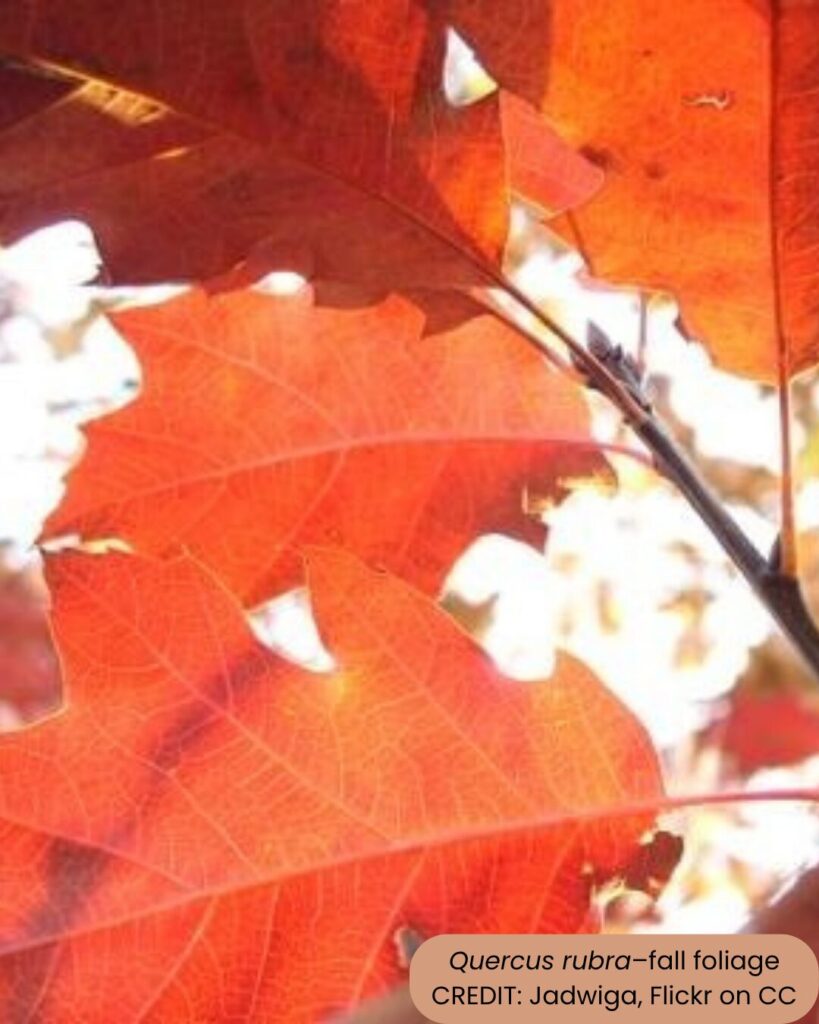
Faster-growing than other oaks, a red oak can reach 25 m in its lifespan of 150 years. Grow it in full sun in deep, fertile, loamy and well-drained soils. Male catkins and clusters of female flowers bloom on the same tree in spring. Red oaks dislike drought, dry soils, urban conditions, compaction, salt, deer and rabbits. A pollinator powerhouse, it is larval host to hundreds of species of butterfly and moths including the white admiral butterfly, the cecropia moth, and the unicorn moth. Its large caterpillar population feeds birds and beneficial insects who are drawn to the aphids and other insects that the tree supports. Red oak flowers are a pollen source for bees and its acorns are high-protein food for birds and mammals. The thick bark and leaf litter provides critical overwintering habitat for pollinators and other insects. Blue jays, warblers, orioles, vireos and other birds use it for foraging and nesting.
White pine (Pinus strobus) is Ontario’s provincial tree. From Newfoundland to Manitoba, it grows in many natural sites from dry rocky ridges to bogs but it does best on cool, humid sites with well-drained soil.
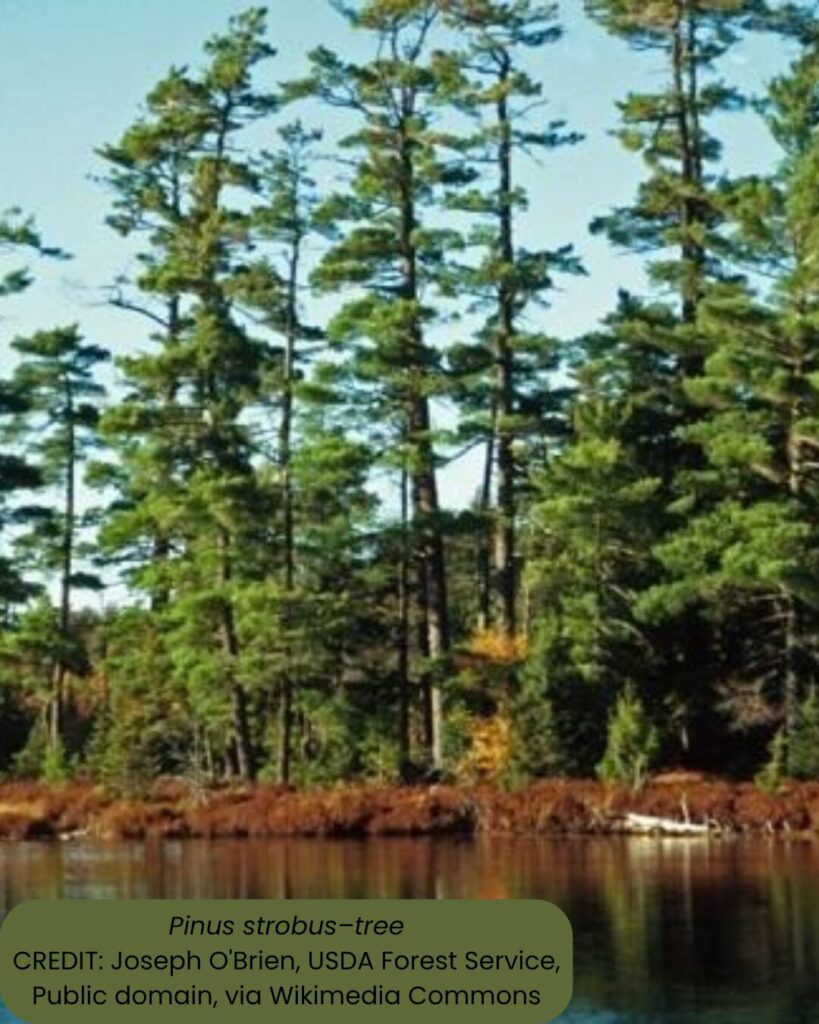
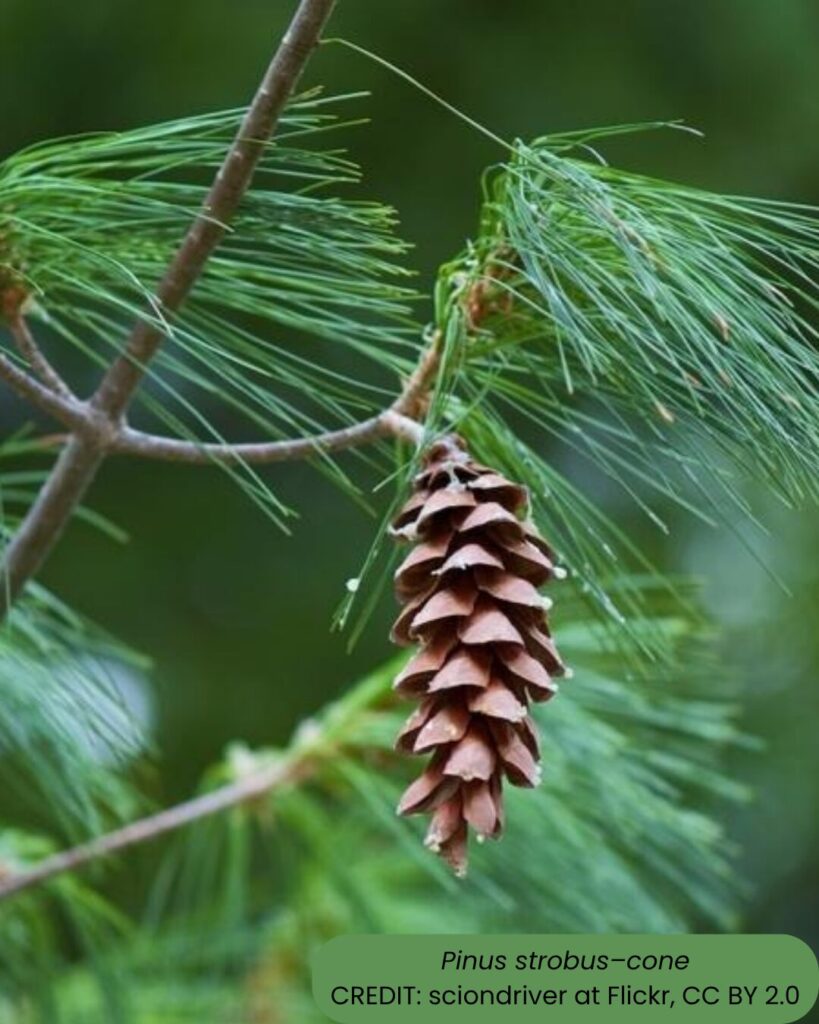
Evergreen and fragrant with soft needles, the white pine is fast-growing. It can reach a height of 24 m or taller in the wild and can live for 200 years or more. White pine should be grown in full sun and in dryish, sandy to moist, loamy soils. It tolerates drought, fire, deer and rabbits. Small and yellow male cones are clustered at the base of new growth. Female cones are long and woody and drop soon after shedding seed. The tree is a larval host plant for over 200 species of butterflies and moths like the northern variable dart and pine sphinx. Its pollen is an early protein source for bees and other insects some of which eat the needles and wood. Small mammals as well as chickadees, warblers, and finches use the tree for food and shelter. White pine offers perching and nesting sites for birds of prey and cavities for woodpeckers and owls. An important contributor to carbon sequestration, local climate regulation, and natural water filtration, it works well as an accent plant, along fence lines, or along slopes.
White spruce (Picea glauca) is another member of the pine family and the provincial tree of Manitoba. It can be found across Canada, east to west and north to south.
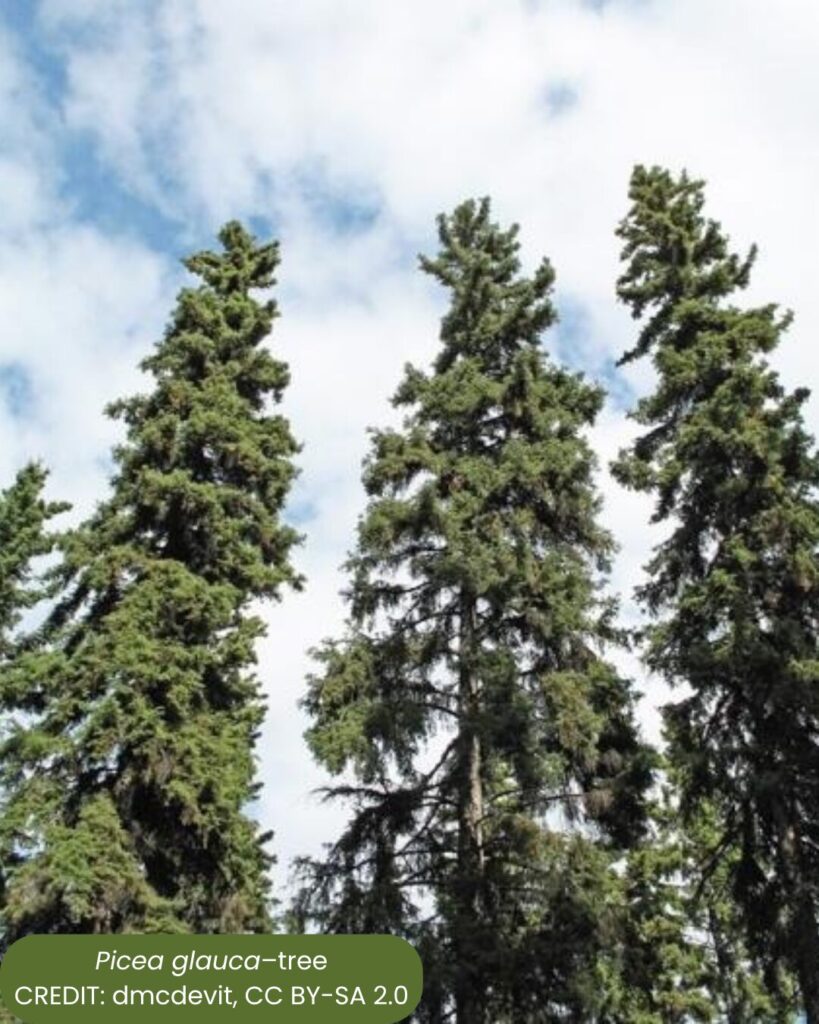
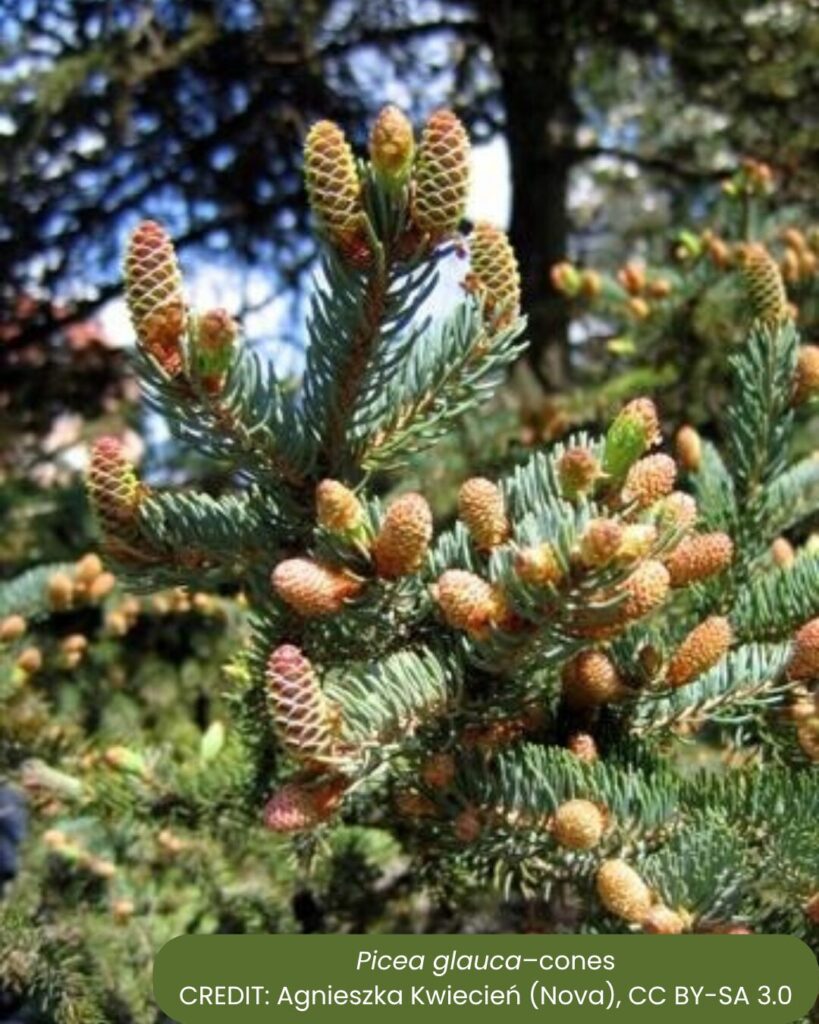
Growing in a wide range of soils and climates, white spruce prefers full sun to part shade and rich, moist soil. Its four-sided needles are stiff and straight but not sharp, and arranged in a spiral. They are pungent when crushed. As the tree ages, its bark becomes salmon pink in colour. It has a shallow root system and is slow-growing to a mature height of 25 m over its 200 years. It tolerates drought, shade, and animal browsing. Scaly male and female cones occur on the same tree—male cones are yellow and point downward; female cones are longer, pale brown and point upwards. A pollinator powerhouse, the white spruce is a larval host to dozens of moth species such as the painted lichen, pale beauty, and white-fringed emerald. It also supports beneficial insects, spiders, and bees that are attracted to its nectar and pollen. Songbirds, red squirrels, martens, and other small mammals eat the seeds and find shelter in its branches. The tree also contributes to carbon sequestration, ecological restoration, and air quality.
Author bio: A Living Green Barrie volunteer since 2025, Cynthia Lauer, PhD is a member of Simcoe County Master Gardeners and a regular contributor to The Gardener magazine. Research resources used for this article include John Laird Farrar’s book, Trees in Canada, Linda Kershaw’s book, Trees of Ontario, Lorraine Johnson’s and Sheila Colla’s book, A Garden for the Rusty-Patched Bumblebee, Heather Holm’s book, Bees: An Identification and Native Plant Forage Guide, and Native Plant Trust, among others websites.